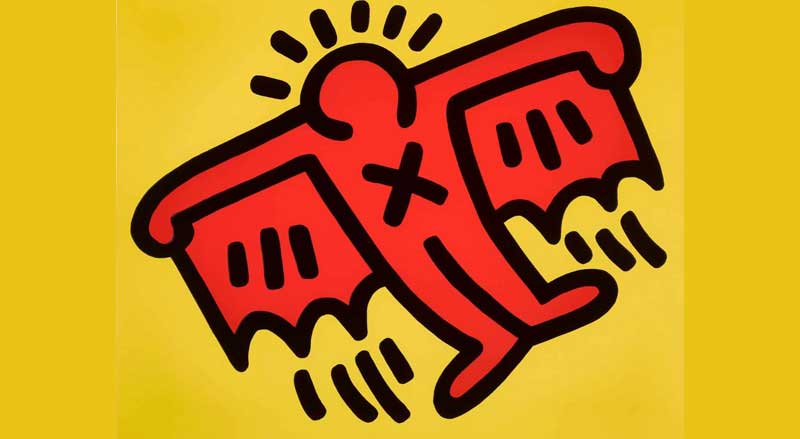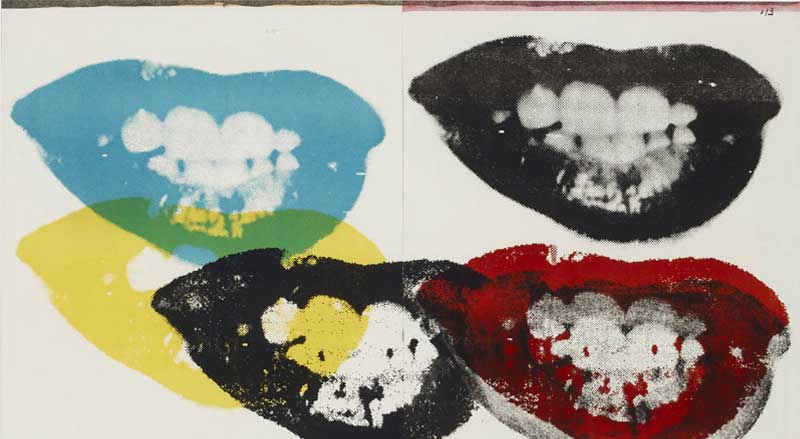



Street art was never meant to be confined.
Born on subway cars, brick walls, and abandoned buildings, it emerged as a visual language of urgency—raw, immediate, and unapologetically public. What began in the streets of New York, London, and other global cities has since reshaped the direction of contemporary fine art. Today, works influenced by street culture hang in major museums, command international auction records, and form the foundation of serious private collections.
At Dane Fine Art, artists such as Jean-Michel Basquiat, KAWS, and Banksy represent the evolution of street aesthetics into globally recognized fine art movements.
Understanding this progression helps collectors appreciate not only the imagery but the cultural power behind it.
Street art emerged in the 1970s and 1980s as a grassroots response to urban life. In New York City, graffiti writers transformed subway trains into moving canvases. In London and Berlin, stencil artists used public walls as platforms for social commentary.
This movement wasn’t born in galleries—it was born in neighborhoods.
Street art was:
Artists used bold outlines, simplified figures, repetition, and symbolic language so their work could be understood instantly. That immediacy would later become one of its greatest strengths as it transitioned to the gallery system.
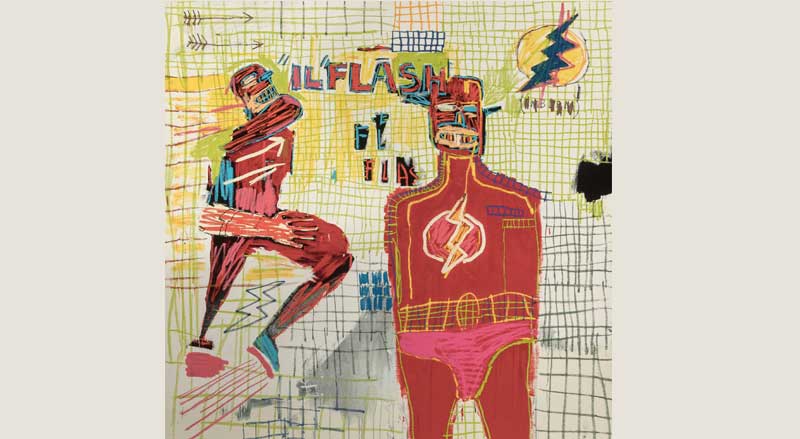
No discussion of street art’s influence on contemporary fine art is complete without Jean-Michel Basquiat.
Basquiat began tagging lower Manhattan under the name “SAMO” before rapidly entering the downtown gallery scene of the early 1980s. His work retained the urgency of the street—scribbled text, fragmented anatomy, symbolic crowns—while engaging deeply with history, race, music, and power structures.
Today, Basquiat’s works are among the most sought-after in the contemporary market.
At Dane Fine Art, collectors can explore powerful examples of Basquiat’s visual language, including: (click on the links below to view each work)
These works demonstrate how Basquiat transformed street-derived aesthetics into museum-level commentary. His compositions feel spontaneous, but they are layered with art historical references, social critique, and personal mythology.
Basquiat did not abandon the street—he elevated it.

Street culture didn’t end with Basquiat. It evolved.
KAWS emerged from a graffiti background, altering advertisements and billboards before transitioning into studio practice. His now-iconic Companion figures—often shown in skeletal form—blend street sensibility with pop iconography.
The Companion Skeleton (Large Green) and Companion Skeleton (Large Orange) screenprints on Movable Skeletons available at Dane Fine Art demonstrate how street aesthetics can become sculptural, collectible, and globally recognized.
KAWS retains the bold graphic clarity of street art but executes it with technical precision and production quality that appeals to serious collectors. His work bridges:
Collectors are drawn to KAWS because he represents the seamless integration of street credibility and institutional validation.

Banksy remains one of the most recognizable street artists in the world—largely because he never fully left the street.
Using stencils and sharp wit, Banksy addresses war, capitalism, authority, and consumerism. His works feel immediate and accessible while maintaining strong conceptual impact.
At Dane Fine Art, collectors can explore works such as:
Even in poster form, Banksy’s imagery carries the same charged tension that made his street works legendary. For collectors, Banksy represents:
His transition into galleries and auctions demonstrates how street art’s rebellious voice can coexist with institutional demand.
Street art entered galleries not because it softened—but because institutions evolved.
Curators began recognizing that:
Major museums now exhibit Basquiat retrospectives. KAWS installations appear in prominent institutions worldwide. Banksy exhibitions draw massive public attendance.
The infiltration was gradual but decisive.
What changed was not the art—it was the art world’s willingness to acknowledge it.
Street aesthetics—bold lines, graphic immediacy, layered symbolism—are now embedded in contemporary painting, sculpture, printmaking, and mixed media practice across generations of artists.

For fine art collectors, street-influenced fine art presents a compelling opportunity.
These works offer:
When evaluating street-derived works, collectors should consider:
1. Cultural Significance
Is the artist foundational to the movement (Basquiat)?
Is the artist globally recognized (Banksy)?
Has the artist crossed into design, fashion, or sculpture (KAWS)?
2. Condition & Authenticity
Given the popularity of these artists, authentication and provenance are critical. Reputable galleries provide documentation and vetting.
3. Market Position Street-influenced artists often perform strongly due to brand recognition and global collector demand.

Street art remains influential because it reflects lived experience. It speaks quickly and directly. It does not require academic decoding to resonate.
Artists like Basquiat, KAWS, and Banksy demonstrate that:
The energy of the street continues to inform contemporary art because cities remain cultural epicenters. The dialogue between public space and private collection remains active and evolving.
Street art’s journey from subway walls to museum walls is one of the most significant evolutions in modern art history. What began as an ephemeral expression has become foundational to contemporary collecting.
For collectors drawn to bold imagery, cultural commentary, and works that reflect the pulse of urban life, street-influenced art offers both aesthetic impact and market presence.
Explore available works by Jean-Michel Basquiat, KAWS, and Banksy at Dane Fine Art to discover pieces that embody street culture’s enduring influence on contemporary fine art.